Serving Yuma, AZ and surrounding areas. (928) 955-4994
A cracking, settling floor is a sign the slab or the soil beneath it has failed. We install concrete floors in Yuma built for the desert heat, shifting soil, and the low humidity that dries concrete too fast if you let it.
Concrete floor installation in Yuma, AZ means preparing the ground, compacting a gravel base, pouring a properly reinforced slab, and finishing it for the intended use - most residential pours are completed in a single day, with a minimum of one week before vehicles or heavy items can go back on the floor.
Whether you are replacing a cracked garage slab, finishing an outdoor covered patio, or converting an open area into a workshop, the process starts with the ground - not the concrete. Premier Yuma Concrete checks soil conditions before every pour, because Yuma's desert soil shifts in ways that destroy slabs built on unprepared ground. Homeowners who want to take their project further often pair a floor installation with a garage floor concrete upgrade that adds thickness and an epoxy-ready finish for vehicle use.
Yuma's extreme heat and low humidity are not just weather - they are active hazards for fresh concrete. Concrete that dries too fast on the surface before it hardens inside becomes weak and prone to early cracking. Getting this right is not complicated, but it requires a crew that has done it here, in this climate, enough times to have a system for it.
Small hairline cracks in concrete are normal, but cracks wider than a pencil that keep growing - or have edges at different heights - mean the slab is moving. In Yuma, desert soil expands and contracts through years of heat cycles and monsoon rains, and once a slab starts moving significantly, patching the surface is only a temporary fix.
Standing water on your garage floor or patio slab after it rains means low spots have formed from settling. Yuma's soil movement - driven by extreme heat and periodic moisture from irrigation - is a common cause. Pooled water is not just an inconvenience - it seeps under walls, damages stored items, and creates a slip hazard.
If the top layer of your floor is peeling in chips or leaving gray dust on everything that sits on it, the surface has deteriorated past the point of simple sealing. Yuma's intense UV exposure and heat break down concrete finishes faster than in milder climates. A new floor poured correctly for desert conditions will hold up far longer than repeated patching on a failing surface.
Concrete that sounds hollow when you tap it or feels slightly springy underfoot has separated from the ground below - called voiding or delamination. This happens when soil settles or washes away under the slab, leaving it unsupported. In Yuma, irrigation water can move soil under slabs over time. A floor with significant voids is a safety concern and typically needs full replacement.
Our floor installation service covers the full scope: old floor demolition when needed, subgrade compaction, gravel base, vapor barrier, forming, the concrete pour, control joint cutting, and your chosen surface finish. Standard residential floors are four inches thick - enough for foot traffic and furniture. Spaces that will park vehicles or support heavy equipment get a five- or six-inch pour. Every slab includes control joints cut at regular intervals to give the concrete a planned flex point instead of random surface cracks.
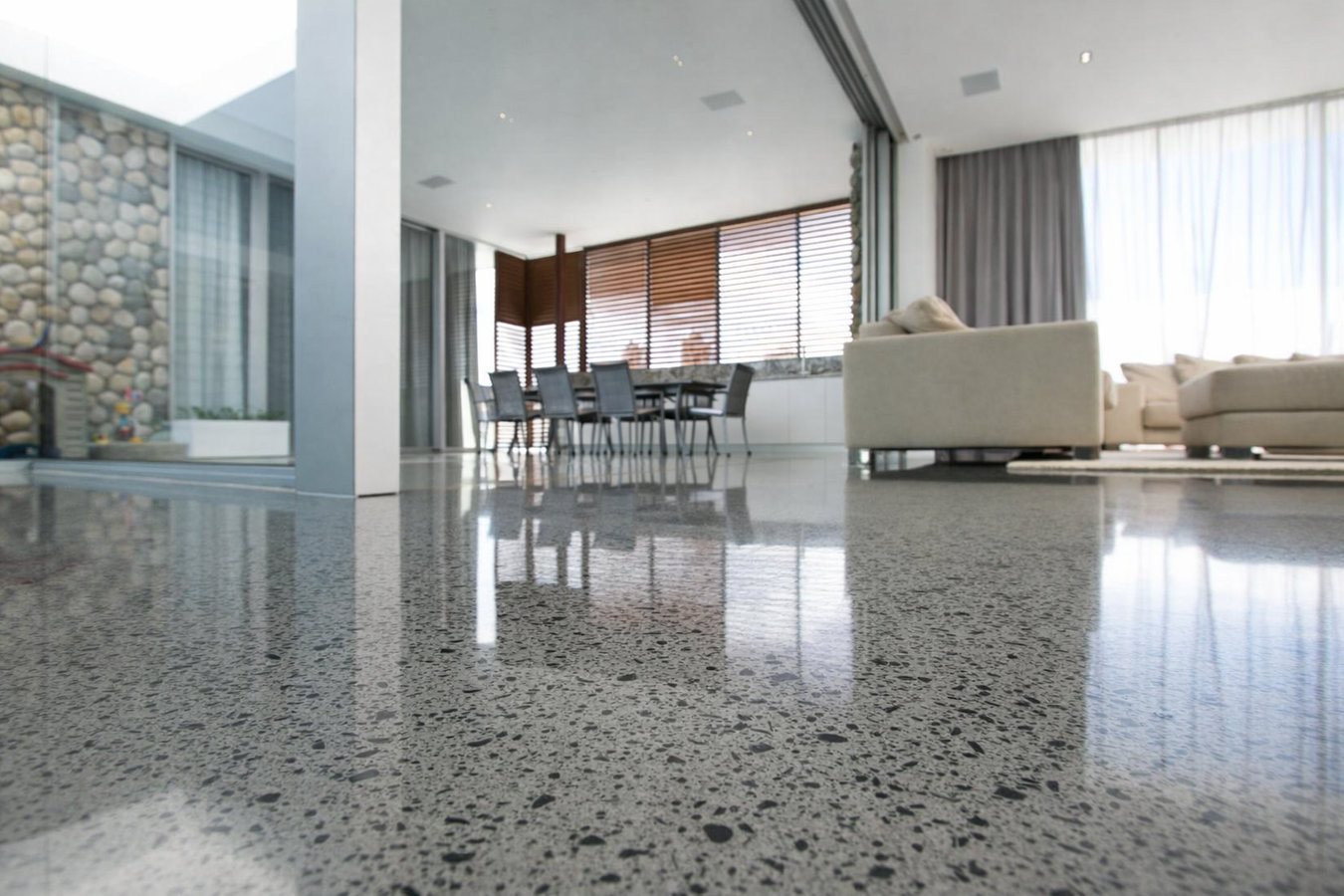
For finish, you can choose from a plain broom finish, a smooth trowel finish, stamped patterns, stained color, or a polished surface. Some finishes - particularly staining - need to be chosen before the pour, not after. Homeowners who want to extend their concrete work outdoors often pair a floor installation with our concrete pool decks service to create a seamless outdoor living area around a pool with consistent concrete throughout.
Suits garages, patios, and utility spaces where a clean, functional surface is the priority.
Suits interior rooms, covered patios, and any space where the floor is part of the finished look.
Suits workshops, commercial spaces, or homeowners who want a smooth, easy-to-clean reflective surface.
Yuma is one of the hottest and driest cities in the United States, and both of those conditions create real problems for fresh concrete. Heat causes concrete to dry too fast at the surface, leaving the interior under-cured and weak. Low humidity pulls moisture out of the slab almost immediately after the pour. Experienced Yuma contractors use curing compounds, moisture covers, and early-morning scheduling to manage both risks - not as special precautions, but as standard procedure. The National Ready Mixed Concrete Association publishes guidance on hot-weather concreting that shapes how we approach every Yuma pour.
Yuma County also has one of the most extensive agricultural irrigation systems in the country, which means some residential lots sit on soil that has been wetted and dried repeatedly for decades. That history leaves soil that is softer in spots, more variable than it looks from the surface, and more likely to shift under a slab if the gravel base is skipped. Homeowners in central Yuma and those near the agricultural belt in areas like El Centro share these soil conditions. We assess the ground before every pour and build accordingly.
We ask about the space size, current floor condition, and intended use - then schedule a site visit before giving you any price. Your written estimate breaks down labor, materials, and site prep separately so nothing is hidden. We reply within one business day of your call or form submission.
We check ground conditions, measure the area, and confirm the grade before any work starts. If your project requires a City of Yuma permit, we pull it in our name and schedule the required inspection - you do not visit any city office or fill out a single form.
The crew compacts the soil, lays a gravel base, and sets forms to define the slab edges. Because of Yuma's heat, pours start early in the morning. We cut control joints into the fresh concrete before it fully sets to guide where the slab naturally wants to flex.
We apply a curing compound immediately after finishing to protect the slab from Yuma's dry air. Once cured, the city inspector signs off if a permit was required. At the final walkthrough, we explain the control joints, care instructions, and when to consider sealing.
Free on-site estimate. Written quote before any work starts. We handle the permit.
(928) 955-4994Premier Yuma Concrete holds an active Arizona Registrar of Contractors license and carries full liability and workers' comp coverage. You can verify our license at roc.az.gov before signing anything - we encourage it.
Every summer floor pour is scheduled before sunrise and uses hot-weather concrete mixes that slow the curing rate. Yuma's 110-degree days demand this. It is why our slabs do not flake, dust, or crack in the first season.
We handle all City of Yuma permitting paperwork in-house. A permitted floor is documented in your property records - protection that matters when you sell the home or file an insurance claim.
We compact every subgrade and lay a proper gravel base before any concrete is poured. Yuma's soil shifts - it expands when irrigation water runs nearby and contracts in the dry heat. That soil prep step is what keeps your floor level and crack-free for years.
A well-poured concrete floor is nearly invisible when done right - it just works, year after year. The work that matters happens before the concrete truck arrives: the soil prep, the base, the forms.
You can confirm any Arizona contractor's license at no cost at roc.az.gov before signing any contract. A contractor who hesitates when you ask for their license number is a contractor worth reconsidering.
Take the same quality concrete work outside your home to a durable, slip-resistant pool deck built for Yuma's heat.
Learn moreUpgrade your garage with a dedicated garage floor pour - thicker slab, vehicle-grade concrete, and optional epoxy-ready finish.
Learn moreCooler-weather pour slots book out weeks in advance - reach out today and we will get back to you within one business day.